Ball and plug valves
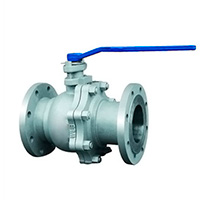
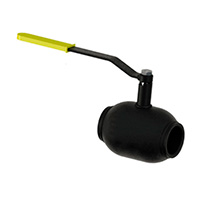
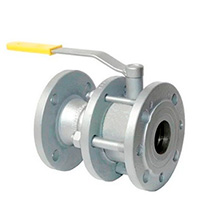
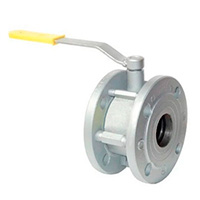
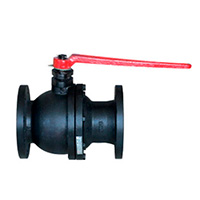
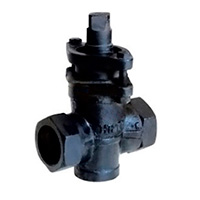
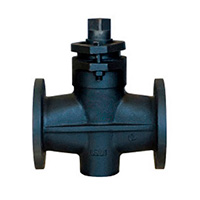
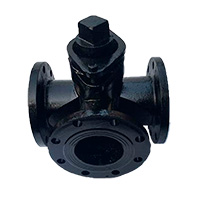
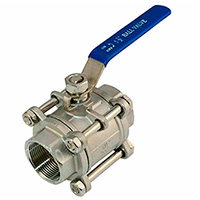
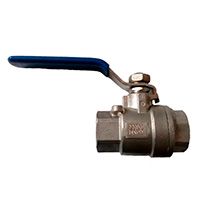
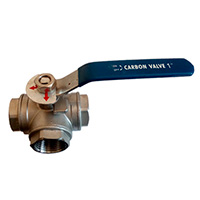
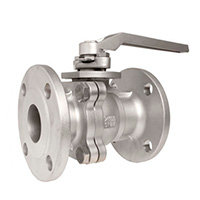
Description of Section "Ball and plug valves"
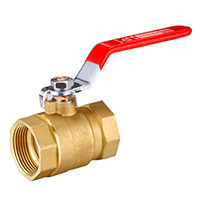
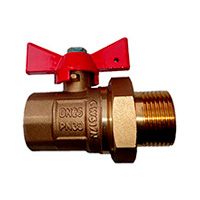
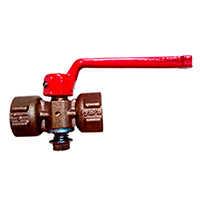
Plug or ball valve is a type of valve in which shut-off element is made in the form of a spherical plug or ball with a drilled through hole.
The main operating principle of a ball valve is as follows:
- Shut-off element
- Inside the ball valve body, there is a ball with a round hole along its axis.
- When the ball's hole is aligned with the pipeline, the medium flows through it (valve is open).
- When the ball is rotated 90°, the hole becomes perpendicular to the flow, completely blocking it (valve is closed).
- Control
- Control is carried out by a handle or actuator that rotates the ball around its axis.
- A 90° rotation is required to fully open or close the valve, making operation quick and convenient.
- Types of ball valves
- Full-bore: The diameter of the ball's hole matches the pipe diameter, minimizing hydraulic losses.
- Reduced-bore: The hole is smaller than the pipe diameter, reducing flow capacity.
- Design features
- Tightness is ensured by sealing rings made of materials such as fluoroplastic, stainless steel, brass and others.
- Design eliminates stagnant zones and minimizes flow resistance.
- Applications
- Used for quick shut-off of liquid and gas flows in water supply, heating, oil and gas industries, and other sectors.
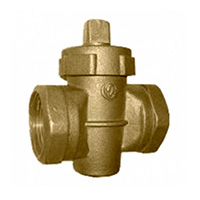
A plug valve uses a conical or cylindrical plug as the shut-off element. Its operating principle is as follows:
- Shut-off element
- Inside the plug valve body, there is a plug with a hole for the medium to pass through.
- When the plug's hole aligns with the pipeline direction, the flow passes through the valve (open position).
- Rotating the plug 90° blocks the medium flow (closed position).
- Control
- Control is achieved by rotating the plug around its axis manually or using an actuator.
- Like for a ball valve, a 90° rotation is required to fully open or close the valve.
- Design features
- Simple design without complex parts.
- Sealing is achieved by lapping the plug surface to the valve body.
- Design disadvantages
- High hydraulic resistance due to a smaller flow diameter (usually 25-30% smaller than the pipe diameter).
- Tendency for the shut-off element to "stick" during prolonged inactivity due to drying of lubricant or deposit formation.
- Applications
- Used primarily in older water and gas supply systems or where high tightness is not required.